View a Lunar Eclipse from Liberty Science Center!
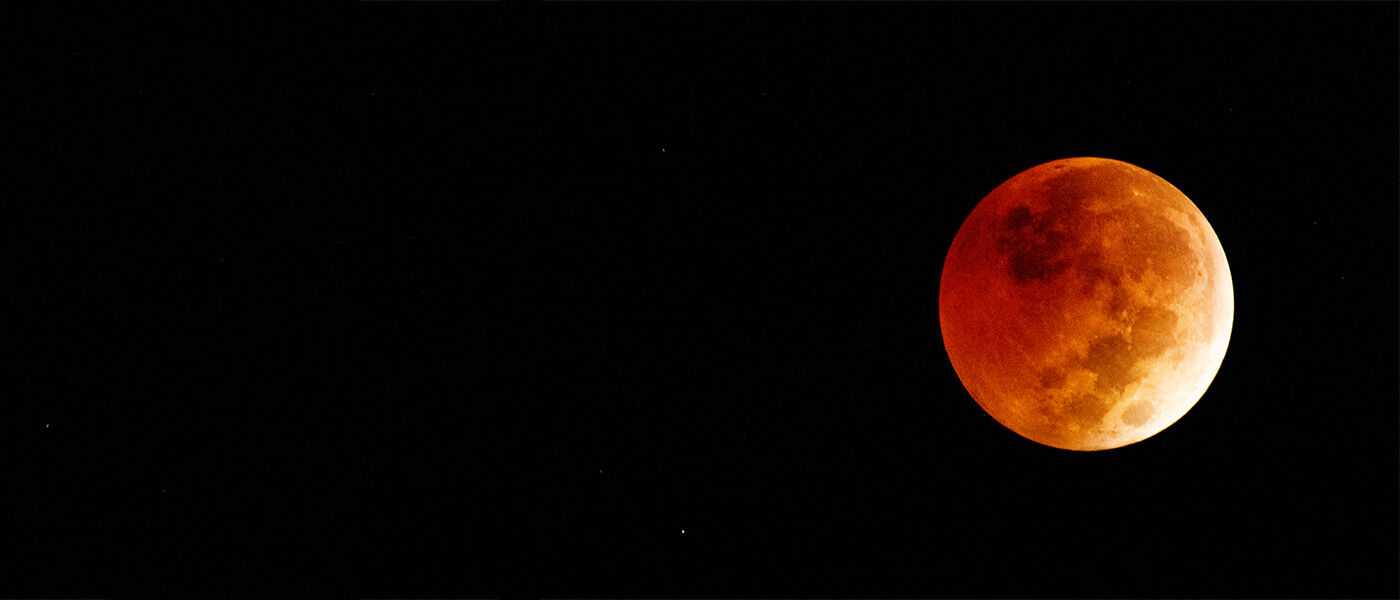
Just over two weeks after the spectacular solar eclipse on August 12th comes another dazzling event in the sky, a lunar eclipse! Late into the night on August 27th at 10:33pm the Earth’s umbra, or shadow, will begin to cover the moon lasting until early in the morning on August 28th at 1:51am Eastern time. While this isn’t quite a total lunar eclipse, it is a very deep partial lunar eclipse with just over 96% of the Moon being covered by Earth’s shadow at the maximum point at 12:12am on August 28th.
Liberty Science Center will stay open until 1 AM during LSC After Dark: Jellyfish Rave (21+) on August 27 to view this spectacular event! We’ll feature telescopes to view the Moon in incredible detail, specialty planetarium shows, and more! Adult guests can show up as early as 6 PM to explore the Science Center and take part in everything LSC After Dark has to offer ahead of this cosmic spectacle— learn more here.
Why do lunar eclipses happen?
A total lunar eclipse like this occurs when the Earth’s shadow falls on the Moon. For this effect to happen the Sun, Earth, and Moon need to be in perfect alignment at a time when the Moon is visible from your location. On average, total lunar eclipses are only visible from any given spot on Earth every 2.5 years!
How can I see this partial lunar eclipse?
From New Jersey, the eclipse becomes visible starting at 10:33pm on August 27th, peaking at 12:12am with 96% of the Moon covered on August 28th, ending at 1:51am. To view it, all you need is your eyes, but viewing it through binoculars or a telescope is also a great option. Unlike with a Solar Eclipse, you do not need additional eye protection to view a Lunar eclipse! Due to the timing, the eclipse will be visible while the Moon is nice and high in the sky so it should be easily viewed from anywhere with clear skies.
We just had a solar eclipse, why is there a lunar eclipse?
Solar and lunar eclipses often occur in pairs due to the tilted nature of the Moon’s orbit. When the Sun, and Earth line up with the Moon’s tilt this creates an eclipse season.The New Moon phase creates a solar eclipse while the Full Moon phase creates a lunar eclipse with the eclipses occurring around two weeks apart from each other.
What is a Blood Moon?
As we get closer to the event, you may hear this called a Blood Moon, or a partial Blood Moon. A Blood Moon is just another name for a total lunar eclipse, named thanks to the eerie red color the moon gains from Earth’s shadow. While the Earth blocks almost all of the light that would reach the Moon, some light still is able to pass through the Earth’s atmosphere. While most colors of light are scattered around and filtered out, colors made from longer wavelengths of light like red and orange pass through the atmosphere and are bent toward the Moon. So the only light that makes it to the Moon is red or orange!
When are the next eclipses visible?
From New Jersey, the next visible lunar eclipse will be a very slight partial lunar eclipse on January 12, 2028 followed by a very slight partial solar eclipse on January 26th, 2028. The next total lunar eclipse will be on June 26, 2029.
Get tickets to LSC After Dark: Jellyfish Rave (21+) to view this celestial phenomenon with us at Liberty Science Center!
